Nodes and Edges
Graph topology is the escape hatch for boards that don't fit grids, hexes, or tracks. Define nodes, connect them with edges. The topology provides adjacency; game rules handle movement and capture.
Nine Men's Morris Rules
Three concentric squares connected by midpoints. 24 nodes, 32 edges. The "concentric-rings" structure generator creates the classic Morris board from parameters. Mill detection is a plugin concern, not a topology concern.
engine:
  topology:
    type: graph
    structure: concentric-rings
    params:
      rings: 3
      midpoints: true
  players: [white, black]
  setup: ""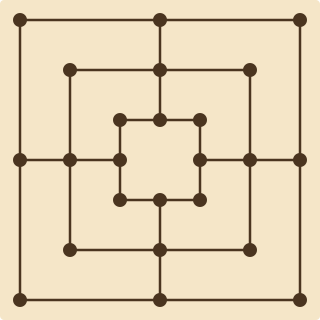
Nine Men's Morris (3 rings + midpoints) — 24 nodes, 32 edges
Six Men's Morris Rules
Two concentric squares, no midpoints. Fewer nodes mean faster, more tactical games. Same structure generator, different ring count and midpoint parameter. The mill-forming logic works identically.
engine:
  topology:
    type: graph
    structure: concentric-rings
    params:
      rings: 2
      midpoints: false
  players: [white, black]
  setup: ""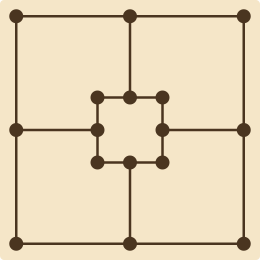
Six Men's Morris (2 rings, no midpoints) — compact variant
Twelve Men's Morris Rules
Three concentric squares with midpoints AND diagonal connections. More edges mean more possible mills and more complex movement. The structure generator adds diagonals as a parameter.
engine:
  topology:
    type: graph
    structure: concentric-rings
    params:
      rings: 3
      midpoints: true
      diagonals: true
  players: [white, black]
  setup: ""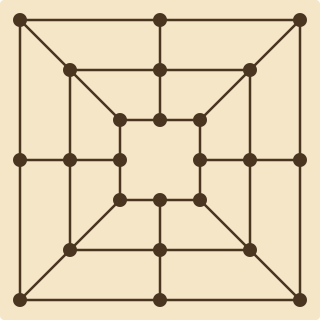
Twelve Men's Morris (3 rings + midpoints + diagonals) — maximum connections