Count and Capture
The pit topology provides a sowing path: pick up all seeds from a pit, drop one in each subsequent pit. What happens on the last seed (capture, extra turn, relay) is the plugin's concern. The topology just knows the path.
Kalah Rules
The most common Western mancala. Six pits per side with stores. Capture by landing in an empty pit on your side. Extra turn when the last seed lands in your store. The topology provides the Kalah-correct sowing path (skip opponent's store).
engine:
  topology:
    type: pit
  players: [south, north]
  setup: "4,4,4,4,4,4;0;4,4,4,4,4,4;0"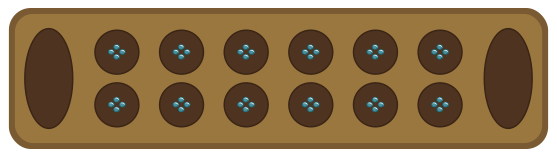
Kalah (6 pits per side + stores) — Kalah-correct sow path
Oware Rules
West African mancala with no stores. Capture by making the opponent's pit contain exactly 2 or 3 seeds. Seeds cycle continuously around the board. Same topology, different column count and no stores parameter.
engine:
  topology:
    type: pit
    cols: 6
    stores: false
  players: [south, north]
  render:
    cellSize: 24
  setup: "4,4,4,4,4,4;0;4,4,4,4,4,4;0"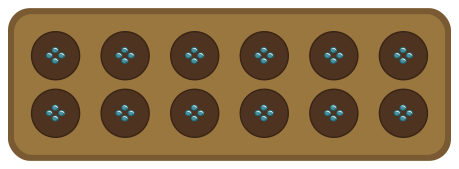
Oware (6 pits, no stores) — capture at 2 or 3 seeds
Congkak Rules
Southeast Asian mancala with 7 pits per side and stores. Relay sowing: if the last seed lands in an occupied pit, pick up and continue. The topology scales to any pit count; relay logic lives in the plugin.
engine:
  topology:
    type: pit
    cols: 7
  players: [south, north]
  setup: "7,7,7,7,7,7,7;0;7,7,7,7,7,7,7;0"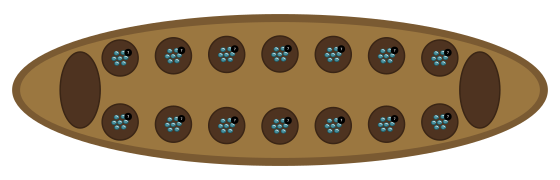
Congkak (7 pits per side) — relay sowing, more seeds