Spatial Without a Board
Card and tile games still need spatial arrangement: who sits where, how cards are dealt, where the draw pile lives. Tableau provides this without a grid. Layout mode determines the arrangement; the deck component provides the cards.
Bridge — Radial Layout Rules
Four players around a table, each receiving 13 cards. The radial layout positions players at compass points. The standard-52 component provides the deck; the topology provides the seating.
engine:
  players: [north, south, east, west]
  components:
    deck:
      type: standard-52
      count: 1
      jokers: 0
  topology:
    type: tableau
    layout: radial
  deal:
    minPlayers: 4
    maxPlayers: 4
    defaultPlayers: 4
    perPlayer: 13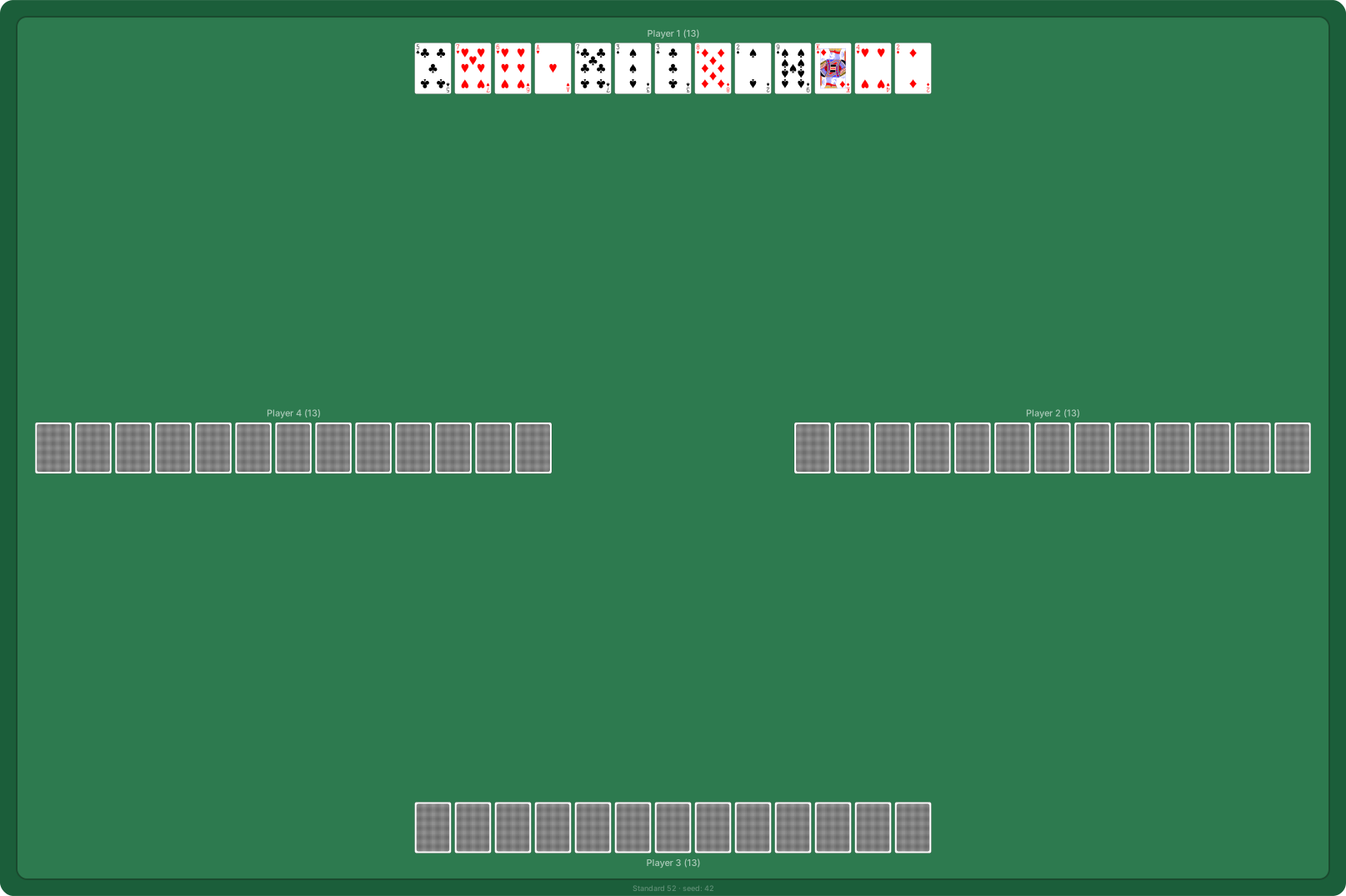
Bridge (radial layout, 4 players) — standard-52 deck, 13 cards each
Mahjong — Wall Layout Rules
144 tiles arranged in a wall structure, drawn from the ends. Four players at compass positions. The wall layout is unique to tile games, but uses the same topology contract as radial or linear.
engine:
  players: [east, south, west, north]
  components:
    tiles:
      suits: [characters, bamboo, circles]
      honours: [winds, dragons]
      bonus: [flowers, seasons]
      total: 144
  topology:
    type: tableau
    layout: wall
  deal:
    minPlayers: 4
    maxPlayers: 4
    defaultPlayers: 4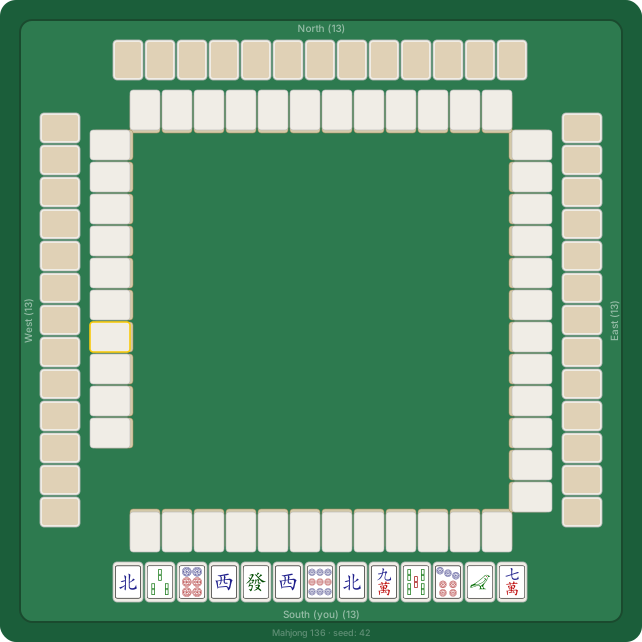
Mahjong (wall layout) — 144 tiles, 4 players
Hanafuda (Koi-Koi) — Tableau Layout Rules
Japanese flower cards with a central tableau. Cards are played to a shared field, matched by month. The tableau layout places a communal area between players, distinct from radial hands.
engine:
  players: [oya, ko]
  components:
    deck:
      type: flower-48
  topology:
    type: tableau
    layout: tableau
  deal:
    perPlayer: 8
    tableau: 8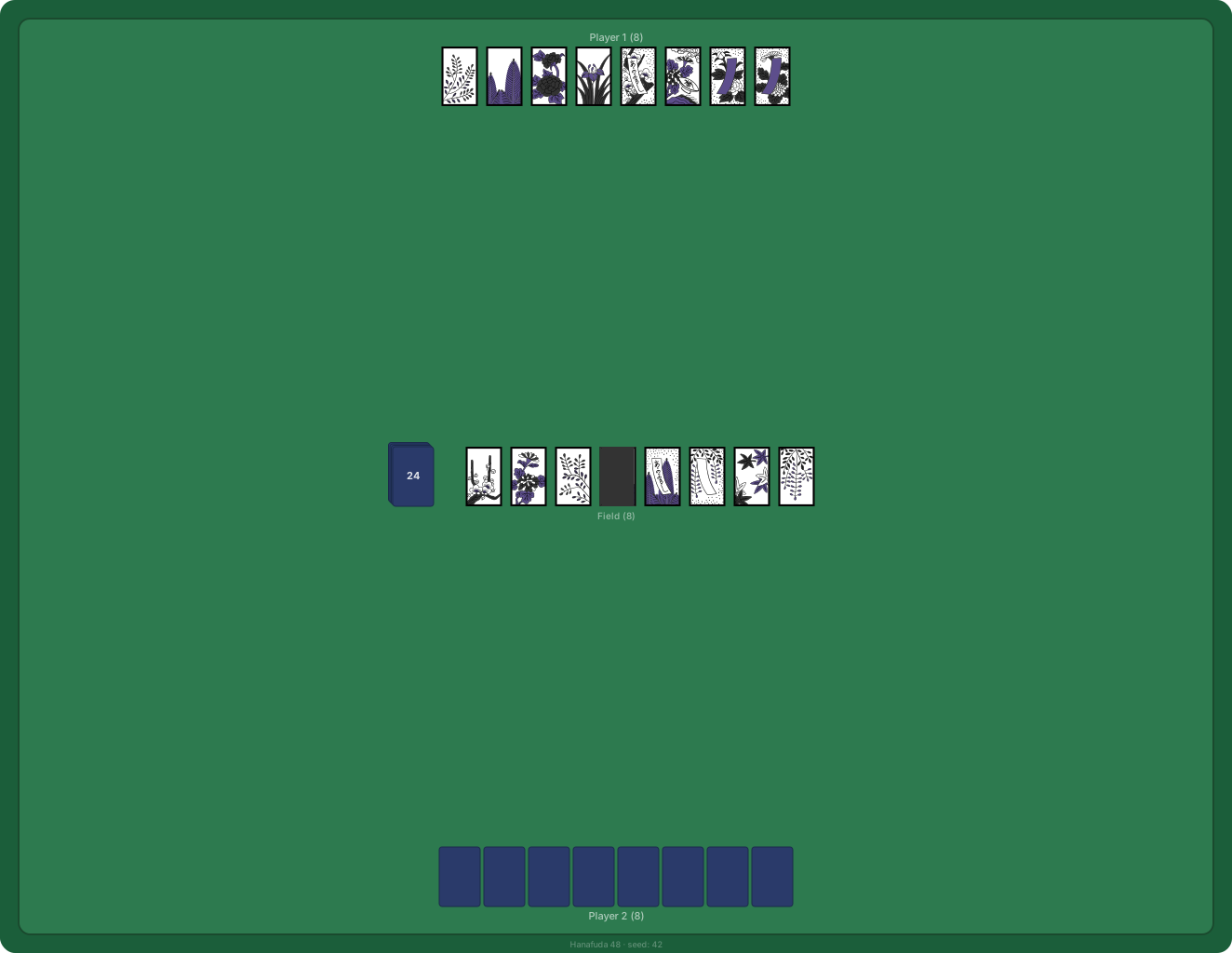
Koi-Koi (tableau layout) — flower-48 deck, shared field