Paths, Not Grids
Track topology reduces the board to a sequence of positions. Pieces move forward by count. Branching, circuits, and stacking are parameters. The topology handles addressing; game rules handle interaction.
Backgammon Rules
24 numbered points in a linear track. Pieces stack on positions and move by dice roll. The topology provides position addressing and distance calculation; the plugin handles bearing off, hitting, and the bar.
engine:
  topology:
    type: track
    positions: 24
  players: [white, black]
  setup: "0:2W,5:5B,7:3B,11:5W,12:5B,16:3W,18:5W,23:2B"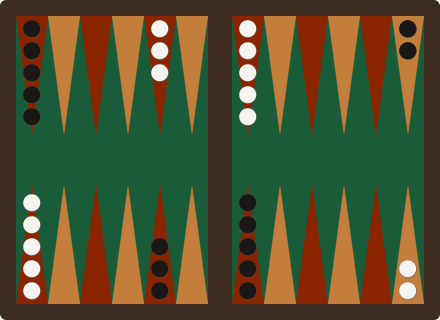
Backgammon (24-point track) — stacking, dice movement
Pachisi Rules
A cross-shaped circuit track with multiple arms and home rows. Four players race pieces around the circuit, capturing by landing. Same topology type as backgammon, different position count and path structure.
engine:
  topology:
    type: track
    positions: 68
    circuit: true
    arms: 4
    homeRows: true
  players: [red, yellow, green, blue]
  setup: "home:4R,home:4Y,home:4G,home:4B"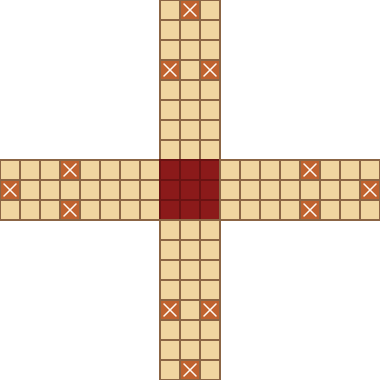
Pachisi (68-position circuit) — four-player race with arms
The Landlord's Game (1904) Rules
A 40-position property circuit. The ancestor of Monopoly. Positions have properties (rent, price) loaded from external JSON. Same track topology, extended with content data.
engine:
  topology:
    type: track
    positions: 40
  players: [player1, player2]
  setup: ""
  render:
    overflow: visible
  content:
    source: landlords-game-boards.json
    board: 1904-patent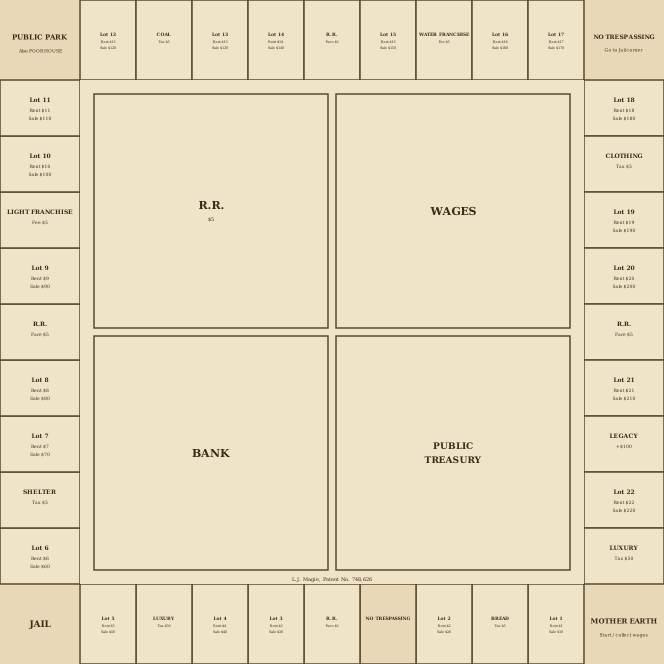
Landlord's Game 1904 (40-position circuit) — property track with content data